
-
 files/SR90-2022-750x_e8c3e47e-71f9-43d9-a17e-0a55348b26c6.jpg
-
 files/Weld-El-Product-Dimensions-LR90-SR90-45_46aacf76-21cd-400a-82ef-adecaaaee187.jpg


The Fabricator's Choice for High Horsepower Turbo Manifold Builds!
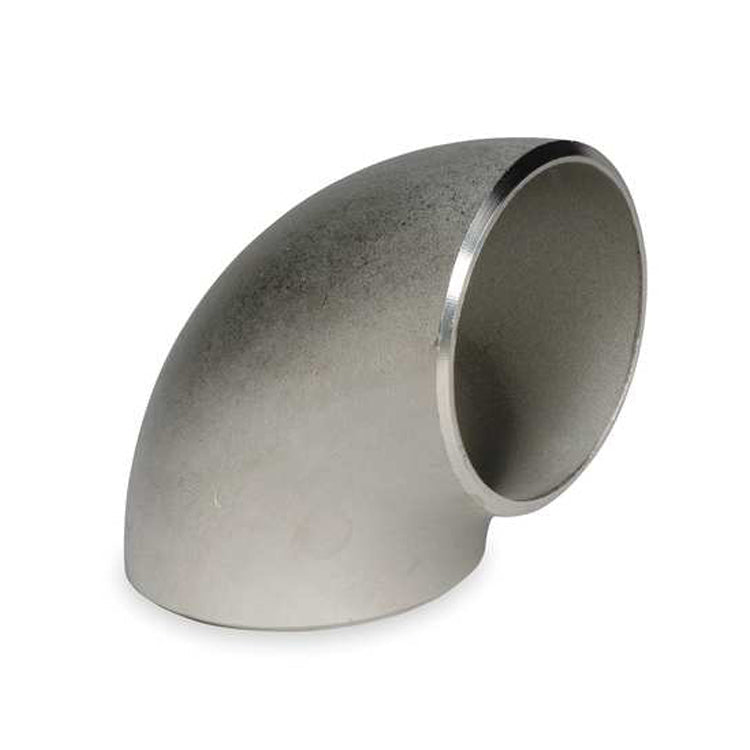
The Ace Race Parts brand of Schedule 10 Short Radius 90° Weld Els are available in 321 Stainless! Our 321 Stainless Weld Els offer superior corrosion resistance in high temperature applications — especially applications that will see extended periods of wide open throttle (eg: a track car) or will see repeated high heat cycling (eg: a drag car that sees significant cooling between passes). With a slight addition of Titanium to stabilize the alloy at high temperatures, 321 Stainless is an excellent choice for turbo manifolds that will be exposed to high levels of heat over a prolonged period of time.
FEATURES
- Tight Radius 90° Bend Angle
- 321 Stainless Steel
- Allows for a Smooth, Unobstructed Flow of Exhaust Gas
- Durable Enough for a Wide Variety of Turbo Manifold Applications
- Capable of Withstanding 1,600°F
- 37.5° Beveled Ends
- Manufactured to ASTM A403/ASME B16.9 specifications
304 Stainless vs 321 Stainless
One major chemical difference between 304 and 321 Stainless is the addition of Titanium (Ti) in 321 stainless to help "stabilize" the alloy and to reduce the risk of corrosion in the heat-affected zone. When 304 Stainless is heated above 1,292°F for an extended period of time it may suffer from weld decay. Weld decay is reduced by the addition of titanium, making 321 Stainless ideal for use in turbo exhaust manifolds and other exhaust products that see high levels of heat over prolonged periods of time. Although 304 Stainless is more than suitable for most turbo manifold and other exhaust applications, 321 Stainless is the superior choice for heat-related corrosion resistance.
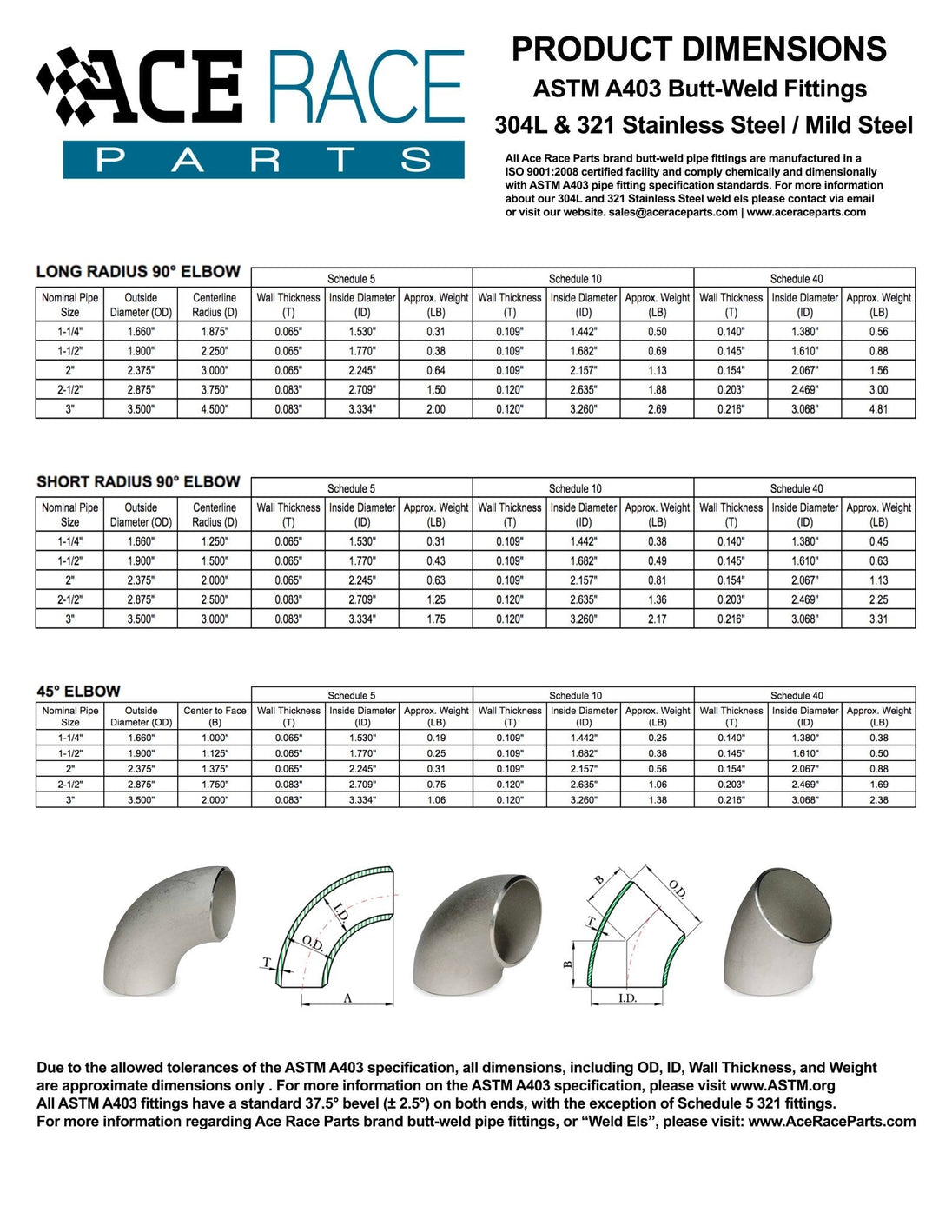
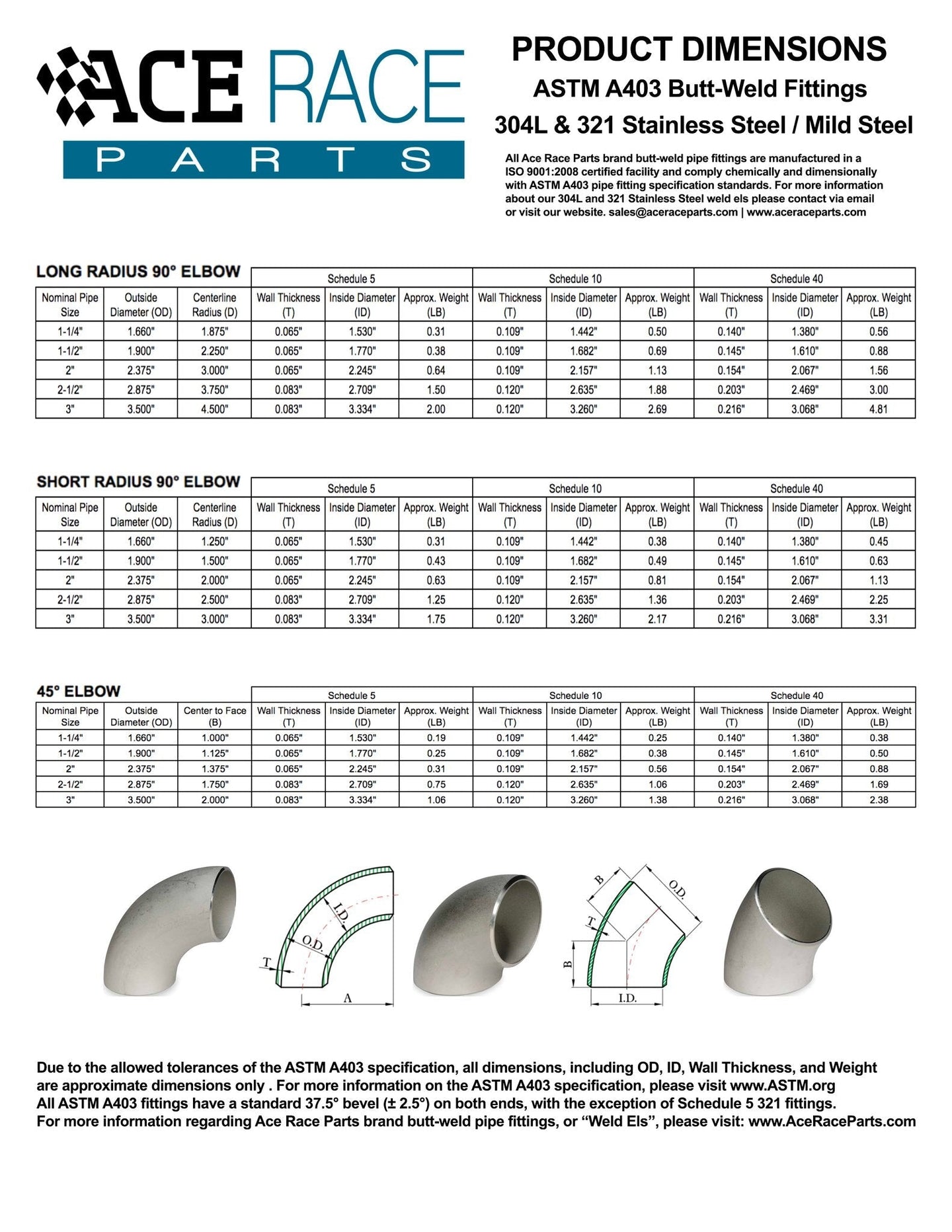
Ace Race Parts brand Weld Els are available in nominal pipe sizes ranging from 1-1/4" to 3" and are available in popular alloys like 304 Stainless and 321 Stainless. A wide range of wall thickness options are available, including Schedule 5, Schedule 10, and Schedule 40. Stainless Weld Els can be paired with Stainless Steel Pipe and Stainless Steel Merge Collectors to create a variety of turbo manifold styles.
The Fabricator's Choice for High Horsepower Turbo Manifold Builds!
The Ace Race Parts brand of Schedule 10 Short Radius 90° Weld Els are available in 321 Stainless! Our 321 Stainless Weld Els offer superior corrosion resistance in high temperature applications — especially applications that will see extended periods of wide open throttle (eg: a track car) or will see repeated high heat cycling (eg: a drag car that sees significant cooling between passes). With a slight addition of Titanium to stabilize the alloy at high temperatures, 321 Stainless is an excellent choice for turbo manifolds that will be exposed to high levels of heat over a prolonged period of time.
FEATURES
- Tight Radius 90° Bend Angle
- 321 Stainless Steel
- Allows for a Smooth, Unobstructed Flow of Exhaust Gas
- Durable Enough for a Wide Variety of Turbo Manifold Applications
- Capable of Withstanding 1,600°F
- 37.5° Beveled Ends
- Manufactured to ASTM A403/ASME B16.9 specifications
304 Stainless vs 321 Stainless
One major chemical difference between 304 and 321 Stainless is the addition of Titanium (Ti) in 321 stainless to help "stabilize" the alloy and to reduce the risk of corrosion in the heat-affected zone. When 304 Stainless is heated above 1,292°F for an extended period of time it may suffer from weld decay. Weld decay is reduced by the addition of titanium, making 321 Stainless ideal for use in turbo exhaust manifolds and other exhaust products that see high levels of heat over prolonged periods of time. Although 304 Stainless is more than suitable for most turbo manifold and other exhaust applications, 321 Stainless is the superior choice for heat-related corrosion resistance.
Ace Race Parts brand Weld Els are available in nominal pipe sizes ranging from 1-1/4" to 3" and are available in popular alloys like 304 Stainless and 321 Stainless. A wide range of wall thickness options are available, including Schedule 5, Schedule 10, and Schedule 40. Stainless Weld Els can be paired with Stainless Steel Pipe and Stainless Steel Merge Collectors to create a variety of turbo manifold styles.
- Regular price
- $19.30


Frequently Bought Together
-

Vendor: Ace Race Parts
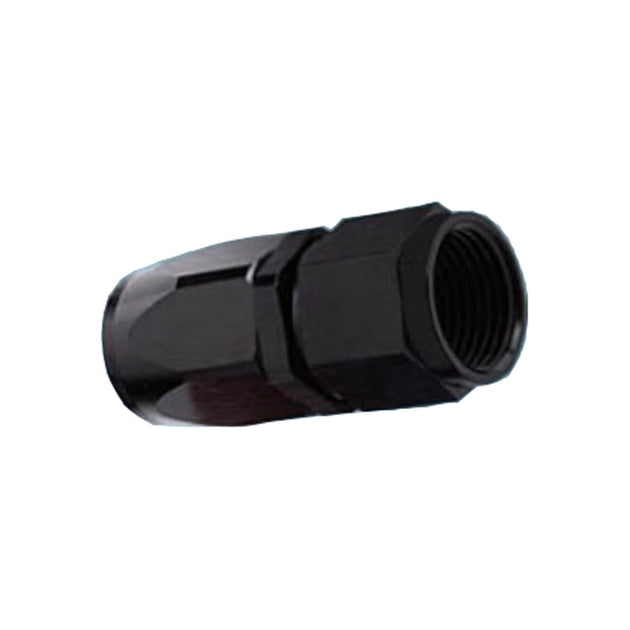
-8AN Female Straight Hose End, Swivel Style, Black Hard Anodized Aluminum
Regular price $9.95 -
Vendor: Ace Race Parts
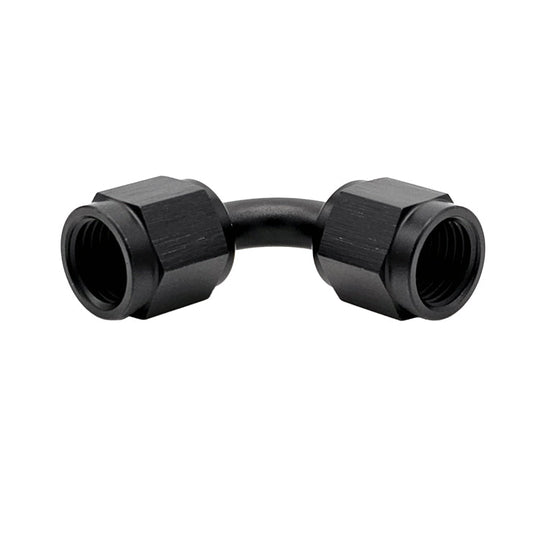
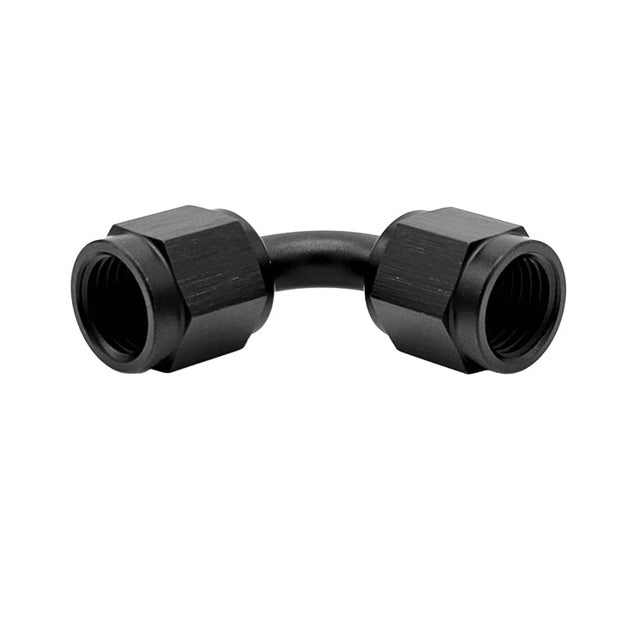
-6AN Female AN Flare Union 90° Adapter, Swivel Style, Black Hard Anodized Aluminum
Regular price $16.25 -

Vendor: Ace Race Parts
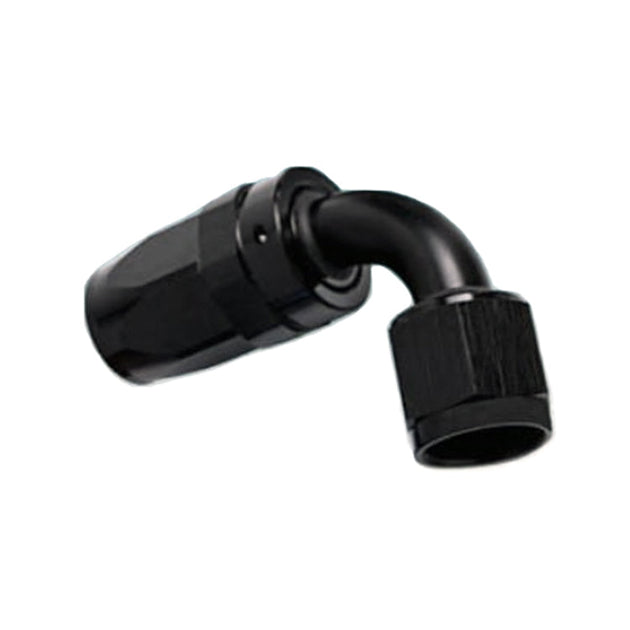
-8AN Female 90° Hose End, Swivel Style, Black Hard Anodized Aluminum
Regular price $24.95 -

Vendor: Ace Race Parts
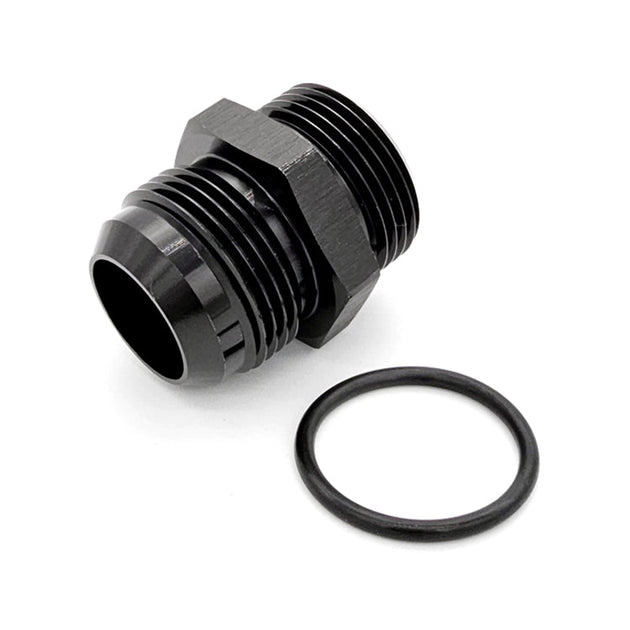
-8AN Male AN Flare to -10AN Male ORB Straight Adapter, Black Hard Anodized
Regular price $8.95


Product Description
The Fabricator's Choice for High Horsepower Turbo Manifold Builds!
The Ace Race Parts brand of Schedule 10 Short Radius 90° Weld Els are available in 321 Stainless! Our 321 Stainless Weld Els offer superior corrosion resistance in high temperature applications — especially applications that will see extended periods of wide open throttle (eg: a track car) or will see repeated high heat cycling (eg: a drag car that sees significant cooling between passes). With a slight addition of Titanium to stabilize the alloy at high temperatures, 321 Stainless is an excellent choice for turbo manifolds that will be exposed to high levels of heat over a prolonged period of time.
FEATURES
- Tight Radius 90° Bend Angle
- 321 Stainless Steel
- Allows for a Smooth, Unobstructed Flow of Exhaust Gas
- Durable Enough for a Wide Variety of Turbo Manifold Applications
- Capable of Withstanding 1,600°F
- 37.5° Beveled Ends
- Manufactured to ASTM A403/ASME B16.9 specifications
304 Stainless vs 321 Stainless
One major chemical difference between 304 and 321 Stainless is the addition of Titanium (Ti) in 321 stainless to help "stabilize" the alloy and to reduce the risk of corrosion in the heat-affected zone. When 304 Stainless is heated above 1,292°F for an extended period of time it may suffer from weld decay. Weld decay is reduced by the addition of titanium, making 321 Stainless ideal for use in turbo exhaust manifolds and other exhaust products that see high levels of heat over prolonged periods of time. Although 304 Stainless is more than suitable for most turbo manifold and other exhaust applications, 321 Stainless is the superior choice for heat-related corrosion resistance.
Ace Race Parts brand Weld Els are available in nominal pipe sizes ranging from 1-1/4" to 3" and are available in popular alloys like 304 Stainless and 321 Stainless. A wide range of wall thickness options are available, including Schedule 5, Schedule 10, and Schedule 40. Stainless Weld Els can be paired with Stainless Steel Pipe and Stainless Steel Merge Collectors to create a variety of turbo manifold styles.
Customer
Reviews
Similar Products
-
Vendor: Ace Race Parts
-8AN Female Straight Hose End, Swivel Style, Black Hard Anodized Aluminum
Regular price $9.95 -
Vendor: Ace Race Parts
-6AN Female AN Flare Union 90° Adapter, Swivel Style, Black Hard Anodized Aluminum
Regular price $16.25 -
Vendor: Ace Race Parts
-8AN Female 90° Hose End, Swivel Style, Black Hard Anodized Aluminum
Regular price $24.95 -
Vendor: Ace Race Parts
-8AN Male AN Flare to -10AN Male ORB Straight Adapter, Black Hard Anodized
Regular price $8.95
